










By Sophia Pardo
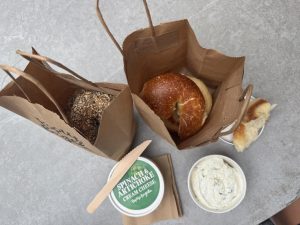
A typical Sunday in Dallas finds some restaurant-goers eagerly waiting in line at Major Food Group’s Sadelle’s Café, patiently inching forward for the NYC-born, upscale bagel experience. College students in matching Parke sweatshirts, coordinated workout sets, and designer slides gather inside the Tiffany-blue dining room in Highland Park Village to debrief the night before, spending the last remains of their allowance on a $10 matcha latte to accompany their post-Saturday night shenanigans.
For SMU student Lain Biles, Sadelle’s is just one example of the many trend-forward coffee shops populating the Dallas dining scene. What sets it apart, she says, is Major Food Group’s ability to create a space that feels both timeless and on-trend, operating with a level of precision that allows guests to enjoy the bougie brunch spot.
“Sadelle’s has truly mastered their aesthetic, making it the perfect place to go with friends or bring family visiting from out of town,” Biles said. “One of the benefits of going to Sadelle’s is the consistency across its products. You always know what to expect.”
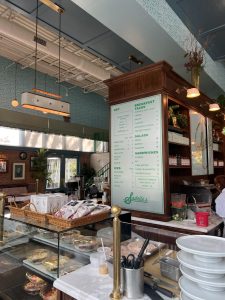
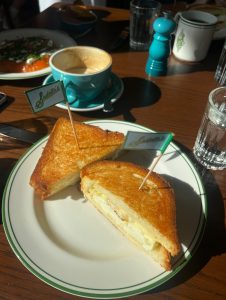
Flocks of Highland Park moms filter in with their young children and oversized Chanel bags, bribing the kids with promises of Sadelle’s famous chocolate babka for good behavior. The formal dining room stays packed with the weekend brunch rush as waiters in pristine blue button-downs, slacks, and white aprons weave through tables carrying trays stacked with mimosas, exotic lattes, and bagel towers filled with caviar.
Despite being tucked away in a back corner of the luxury retail space, Sadelle’s is busier than ever—filled with Dallas residents and visitors who willingly drop money on the coveted brunch spot. Since opening its doors in 2022, Sadelle’s has become one of several dining concepts brought in by high-end restaurant and hospitality groups from cities like New York and Los Angeles.
Dallas has always been a city with wealth, fine dining, and a reputation for upscale experiences. From classic steakhouses and luxury hotel restaurants to longstanding Tex-Mex favorites, the city has long catered to residents with sophisticated tastes. What’s different now, however, is the expansion of high-profile hospitality groups from New York, Los Angeles, and Miami, bringing concepts that had previously been exclusive to other major cities. This influx of trend-forward restaurants and elevated dining experiences raises a compelling question: if Dallas has always had money and good food, why are these companies choosing to infiltrate the city now?
From steakhouses and Tex-Mex to Southern comfort food, Dallas’ culinary identity has long been rooted in tradition. In recent years, the city has welcomed international flavors and upscale concepts: Miami’s Asian-fusion hotspot Komodo opened its doors here, Major Food Group brought its iconic Italian concept Carbone to the Design District, and NYC favorite Sant Ambroeus is set to open on Knox Street. Once-empty storefronts along Knox Streets now boast bougie markets, coffee shops, and high-end boutiques—a reflection of the city’s changing tastes and development.
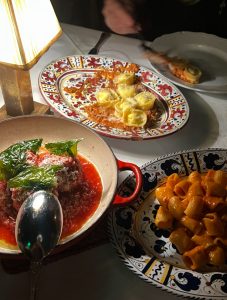
The city’s high-end dining scene is expanding rapidly, blending bold flavors, elevated hospitality, and cultural influences from New York and Los Angeles. As these hospitality companies plant roots, the question of why now becomes even more urgent.
In Uptown, the upscale Greek restaurant Avra Estiatorio has joined the ranks alongside long-standing offerings like NOBU and The Capital Grille. Jonathan Tsatsoulas, Avra Dallas general manager, sees the addition as a way to diversify both the city’s palate and its culinary options.
“Dallas is a growing market with many people from all over moving to the area, and as a result, Dallas’ palate is changing,” Tsatsoulas said. “Our type of cuisine and level of service were missing from the Dallas market.”
Still, these groups are adding a Texas twist. Avra slightly adapted its menu to include steak alongside seafood staples, blending familiar local flavors with Mediterranean classics.
Population growth and economic trends help explain the timing. In a recent U.S. Census report, the Dallas–Fort Worth–Arlington metro ranked as the third-largest numeric population gainer in 2024, adding 177,922 new residents and bringing its total to about 8,344,032. Residents moving from California, New York, and Florida—combined with high-profile white-collar workers attracted by the Texas Stock Exchange—have further increased demand for high-end dining and lifestyle experiences.
“There is nothing that compares to the freshness, quality, and genuine hospitality in Dallas,” Tsatsoulas said. “Dallas is a growing market that is landlocked, so most of the ‘fun’ in the city is centered around going out with friends to share a great meal.”
Looking ahead, LA’s beloved Delilah promises to bring Hollywood glamour to Dallas, incorporating live music, dancers, and tableside performances. “We’ve been looking at Dallas for years,” said founder John Terzian. “We love the mix of business, art, and sports, and it seemed like a perfect place for us. People here are excited about how much the city is growing, and we feel the Delilah brand fills a gap by combining dining with live entertainment.”
SMU senior and professional chef Luke Froeb has witnessed the evolution firsthand. “Being in a city that’s just starting to bloom makes it a powerful time to be in the restaurant business,” he said. “You’re not just opening a restaurant—you’re helping define what the city eats, drinks, and experiences.”
The MICHELIN Guide’s official expansion to Texas in 2024 highlights why the state is now gaining a seat at the table of global culinary recognition. Concepts like Delilah, Avra, Carbone, and Sadelle’s have paved the way for this exciting time in the hospitality scene, making Dallas a city that can be credited with top-notch dining, as recognized by the MICHELIN Guide’s standards for culinary excellence.
As restaurateurs infiltrate the city, they are actively contributing to Dallas’ growing identity. For residents and visitors, this means more than just additions to apps like OpenTable and Resy—it signals that the city’s culinary narrative is changing in real time.
“It’s hard to keep up, honestly,” Froeb said. “I feel like every day I am opening my phone and seeing news of another restaurant group opening.”
With rumors circulating about NYC and LA concepts like Cipriani, Erewhon, Polo Bar, and Tao Group, new openings are more likely than ever in Dallas’ expanding market. Back at Sadelle’s, a young girl holding an iced latte mentions to her friend that she heard NYC’s viral Pop-Up Bagels will be opening in the city. Perhaps she will trade in her matcha and bagel-and-lox for a chance to try Pop-Up Bagels’ famous spreads—like Dessert Bowl Butter or Kraft Mac & Cheese Cream Cheese. One thing is clear: this is just the beginning of the Dallas food scene.